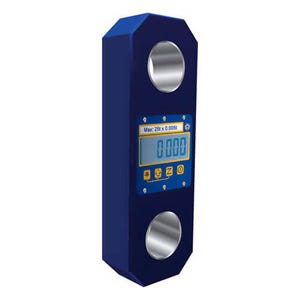
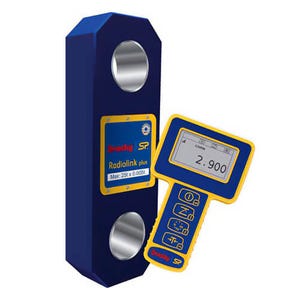
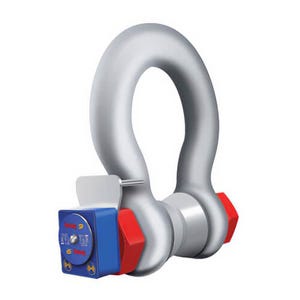
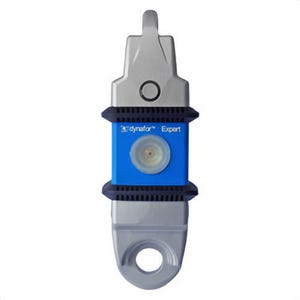
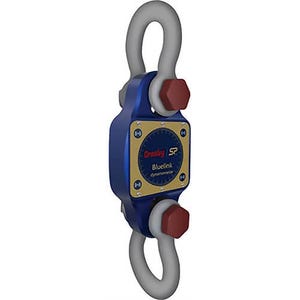
Modern rigging operations require more than calculated estimates and visual checks alone. Load monitoring cells provide real-time insight into the forces acting on lifting systems, helping rigging professionals validate assumptions, manage risk, and maintain control during critical lifts. Whether used for routine picks or complex engineered operations, load monitoring tools add a layer of awareness that supports safer, more efficient lifting practices.
Load Monitoring Role in Rigging Operations
Load monitoring equipment measures live forces during lifting and tensioning, allowing rigging teams to see actual load conditions as work progresses. These systems capture real-time data as loads are raised, rotated, or set, accounting for dynamic forces that cannot be fully predicted during planning.
For professional riggers, this visibility supports informed decision-making throughout the lift. Monitoring confirms that slings, hardware, and lifting devices remain within their rated capacities and provides an early indication when forces exceed their rated limits. This allows crews to respond proactively rather than react after unsafe conditions have already developed.
Typical Applications for Load Monitoring
Load monitoring is widely used in construction, industrial, and heavy-lift settings where precision, coordination, and safety margins are critical. Typical applications include crane lifts, structural steel erection, heavy machinery installation, modular construction, and precast concrete placement. Load monitoring is also frequently used during proof testing, commissioning, and load verification.
In many of these operations, calculated weights do not fully reflect the actual forces due to rigging angles, unequal load sharing, or movement during the lift. Monitoring confirms real-world conditions at critical points, improving confidence during complex or high-consequence picks.
Load Monitoring Versus Traditional Load Estimation
Traditional load estimation relies on drawings, material weights, lift plans, and crane charts to estimate expected forces. While these tools are essential for planning and compliance, they represent idealized conditions that may differ from what occurs in the field.
Load monitoring complements estimation by validating assumptions during execution. It captures the effects of factors including changes in rigging geometry, friction, lift acceleration, and environmental conditions. By measuring live loads rather than relying solely on calculations, rigging professionals reduce uncertainty and gain better control over evolving lift conditions.
Improving Lift Safety with Real-Time Load Data
Real-time load data enhances lift safety by providing immediate feedback on force changes during a lift. Monitoring systems alert crews when loads approach established thresholds, giving operators time to slow, pause, or reconfigure before unsafe conditions develop.
Early identification of uneven loading, shifting centers of gravity, or unexpected force spikes helps reduce the risk of sling overload, hardware deformation, or structural damage. Objective data also improves communication among riggers, crane operators, and supervisors, supporting coordinated responses during critical phases of the lift.
Key Factors When Choosing a Load Monitoring Solution
Selecting a load monitoring solution begins with matching device capacity to the application, ensuring a sufficient margin to accommodate dynamic forces and shock loading. Accuracy and resolution are also important, particularly for precision placement or load verification.
Other considerations include wired versus wireless configurations, display readability in varying light conditions, battery life, and ease of setup. Equipment durability is critical because monitoring devices are often exposed to dust, moisture, vibration, and temperature extremes common on professional jobsites.
Integrating Load Monitoring into Existing Rigging Systems
Load monitoring devices are designed to integrate with standard rigging components, including slings, shackles, spreader beams, cranes, and hoists. In most cases, installation can be done inline without significant changes to established lift procedures.
Proper integration ensures that measured data accurately reflects system forces without introducing unintended stress points or misalignment. When correctly applied, load monitoring becomes a seamless extension of the rigging system, adding visibility without disrupting workflow or efficiency.
Load Monitoring for Critical and Engineered Lifts
Critical and engineered lifts pose greater risk due to their complexity, load magnitude, and operational constraints. Tandem crane lifts, picks involving unknown or shifting centers of gravity, and installations with tight tolerance requirements benefit significantly from continuous load feedback.
Monitoring confirms that loads are being shared as intended across multiple pick points and helps prevent localized overloads. This level of control supports engineered lift plans, reduces guesswork during execution, and provides additional assurance when error margins are limited.
Reducing Downtime and Preventing Equipment Damage
Unexpected overload conditions can damage slings, distort hardware, or require costly crane repairs, all of which lead to downtime and project delays. Load monitoring helps identify developing issues before they escalate into equipment failures.
By better controlling load conditions, crews can reduce re-rigging, avoid trial-and-error adjustments, and minimize unnecessary wear on lifting components. Over time, this contributes to longer equipment life, fewer interruptions, and more predictable jobsite performance.
Maintenance, Calibration, and Long-Term Reliability
To maintain accuracy and reliability, load monitoring equipment requires routine inspection and calibration. Regular checks help ensure that sensors, displays, and power systems are functioning correctly before use and that readings remain consistent over time.
Proper storage, handling, and documentation of calibration intervals further support long-term performance. When maintained as part of a formal rigging program, load monitoring devices remain dependable tools that deliver consistent value across a wide range of lifting applications.
Load monitoring is more than a safety add-on
It is a practical tool that enables smarter lifts, protects equipment, and reduces risk on demanding jobsites. When properly selected and applied, these systems deliver the real-time insight needed to execute complex lifts with confidence.
Our load monitoring cells are engineered for professional rigging environments, delivering the capacity, accuracy, and durability required for critical lifting operations. If your projects demand better load visibility and tighter control, investing in the right monitoring solution can make a measurable difference in both safety and performance.
Have questions or need help choosing the proper device? Our team is here for you! Please give us a call at 844-728-1771, or use the contact form found here.