FREE SHIPPING ON ALL ORDERS OVER $250

Turnbuckles
-
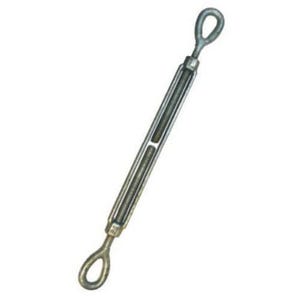
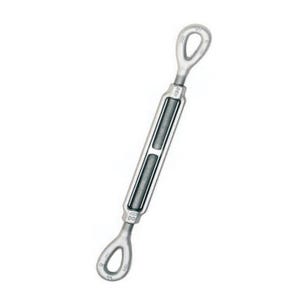
![Turnbuckle, Eye/Eye End/End, 1/2 in Thread dia, Working Load: 2200 lb, 12 in Take Up, 19.08 in Closed Length, Drop Forged Steel]() Turnbuckle, Eye/Eye End/End, 1/2 in Thread dia, Working Load: 2200 lb, 12 in Take Up, 19.08 in Closed Length, Drop Forged Steel SKU#: FIT80155In stock$17.06$17.06
Turnbuckle, Eye/Eye End/End, 1/2 in Thread dia, Working Load: 2200 lb, 12 in Take Up, 19.08 in Closed Length, Drop Forged Steel SKU#: FIT80155In stock$17.06$17.06 -
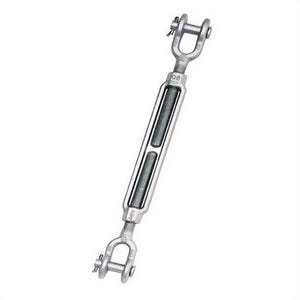
![Crosby® 1032554 HG-228 Turnbuckle, Jaw and Jaw, 1/2 in Thread, 2200 lb Working, 6 in Take Up, 14.14 in L Close, Steel]() Crosby® 1032554 HG-228 Turnbuckle, Jaw and Jaw, 1/2 in Thread, 2200 lb Working, 6 in Take Up, 14.14 in L Close, Steel SKU#: FIT13410In stock$85.10$85.10
Crosby® 1032554 HG-228 Turnbuckle, Jaw and Jaw, 1/2 in Thread, 2200 lb Working, 6 in Take Up, 14.14 in L Close, Steel SKU#: FIT13410In stock$85.10$85.10 -
![Crosby® 1032670 HG-228 Turnbuckle, Jaw and Jaw, 3/4 in Thread, 5200 lb Working, 6 in Take Up, 17.68 in L Close, Steel]() Crosby® 1032670 HG-228 Turnbuckle, Jaw and Jaw, 3/4 in Thread, 5200 lb Working, 6 in Take Up, 17.68 in L Close, Steel SKU#: FIT13590In stock$164.90$164.90
Crosby® 1032670 HG-228 Turnbuckle, Jaw and Jaw, 3/4 in Thread, 5200 lb Working, 6 in Take Up, 17.68 in L Close, Steel SKU#: FIT13590In stock$164.90$164.90 -
![Crosby® 1032732 HG-228 Turnbuckle, Jaw and Jaw, 3/4 in Thread, 5200 lb Working, 18 in Take Up, 30.08 in L Close, Steel]() Crosby® 1032732 HG-228 Turnbuckle, Jaw and Jaw, 3/4 in Thread, 5200 lb Working, 18 in Take Up, 30.08 in L Close, Steel SKU#: FIT13680In stock$283.00$283.00
Crosby® 1032732 HG-228 Turnbuckle, Jaw and Jaw, 3/4 in Thread, 5200 lb Working, 18 in Take Up, 30.08 in L Close, Steel SKU#: FIT13680In stock$283.00$283.00 -
![Crosby® 1031911 HG-227 Turnbuckle, Jaw and Eye, 3/8 in Thread, 1200 lb Working, 6 in Take Up, 11.87 in L Close, Steel]() Crosby® 1031911 HG-227 Turnbuckle, Jaw and Eye, 3/8 in Thread, 1200 lb Working, 6 in Take Up, 11.87 in L Close, Steel SKU#: FIT13375In stock$76.10$76.10
Crosby® 1031911 HG-227 Turnbuckle, Jaw and Eye, 3/8 in Thread, 1200 lb Working, 6 in Take Up, 11.87 in L Close, Steel SKU#: FIT13375In stock$76.10$76.10 -
![Crosby® 1032714 HG-228 Turnbuckle, Jaw and Jaw, 3/4 in Thread, 5200 lb Working, 12 in Take Up, 24.08 in L Close, Steel]() Crosby® 1032714 HG-228 Turnbuckle, Jaw and Jaw, 3/4 in Thread, 5200 lb Working, 12 in Take Up, 24.08 in L Close, Steel SKU#: FIT13650In stock$235.00$235.00
Crosby® 1032714 HG-228 Turnbuckle, Jaw and Jaw, 3/4 in Thread, 5200 lb Working, 12 in Take Up, 24.08 in L Close, Steel SKU#: FIT13650In stock$235.00$235.00 -
![Crosby® 1032796 HG-228 Turnbuckle, Jaw and Jaw, 1 in Thread, 10000 lb Working, 6 in Take Up, 21.18 in L Close, Steel]() Crosby® 1032796 HG-228 Turnbuckle, Jaw and Jaw, 1 in Thread, 10000 lb Working, 6 in Take Up, 21.18 in L Close, Steel SKU#: FIT13770In stock$320.00$320.00
Crosby® 1032796 HG-228 Turnbuckle, Jaw and Jaw, 1 in Thread, 10000 lb Working, 6 in Take Up, 21.18 in L Close, Steel SKU#: FIT13770In stock$320.00$320.00 -
![Crosby® 1032590 HG-228 Turnbuckle, Jaw and Jaw, 1/2 in Thread, 2200 lb Working, 12 in Take Up, 20.43 in L Close, Steel]() Crosby® 1032590 HG-228 Turnbuckle, Jaw and Jaw, 1/2 in Thread, 2200 lb Working, 12 in Take Up, 20.43 in L Close, Steel SKU#: FIT13470In stock$128.20$128.20
Crosby® 1032590 HG-228 Turnbuckle, Jaw and Jaw, 1/2 in Thread, 2200 lb Working, 12 in Take Up, 20.43 in L Close, Steel SKU#: FIT13470In stock$128.20$128.20 -
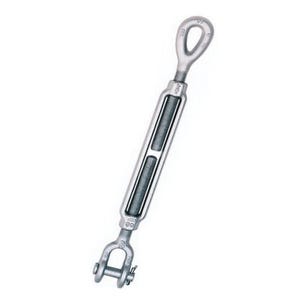
![Crosby® 1031939 HG-227 Turnbuckle, Jaw and Eye, 1/2 in Thread, 2200 lb Working, 6 in Take Up, 14.48 in L Close, Steel]() Crosby® 1031939 HG-227 Turnbuckle, Jaw and Eye, 1/2 in Thread, 2200 lb Working, 6 in Take Up, 14.48 in L Close, Steel SKU#: FIT13405In stock$76.40$76.40
Crosby® 1031939 HG-227 Turnbuckle, Jaw and Eye, 1/2 in Thread, 2200 lb Working, 6 in Take Up, 14.48 in L Close, Steel SKU#: FIT13405In stock$76.40$76.40 -
![Crosby® 1031298 HG-226 Turnbuckle, Eye/Eye, 3/8 in Thread, 1200 lb Working, 6 in Take Up, 12.24 in L Close, Steel]() Crosby® 1031298 HG-226 Turnbuckle, Eye/Eye, 3/8 in Thread, 1200 lb Working, 6 in Take Up, 12.24 in L Close, Steel SKU#: FIT13370In stock$63.30$63.30
Crosby® 1031298 HG-226 Turnbuckle, Eye/Eye, 3/8 in Thread, 1200 lb Working, 6 in Take Up, 12.24 in L Close, Steel SKU#: FIT13370In stock$63.30$63.30 -
![Crosby® 1032652 HG-228 Turnbuckle, Jaw and Jaw, 5/8 in Thread, 3500 lb Working, 12 in Take Up, 22.16 in L Close, Steel]() Crosby® 1032652 HG-228 Turnbuckle, Jaw and Jaw, 5/8 in Thread, 3500 lb Working, 12 in Take Up, 22.16 in L Close, Steel SKU#: FIT13560In stock$180.50$180.50
Crosby® 1032652 HG-228 Turnbuckle, Jaw and Jaw, 5/8 in Thread, 3500 lb Working, 12 in Take Up, 22.16 in L Close, Steel SKU#: FIT13560In stock$180.50$180.50 -
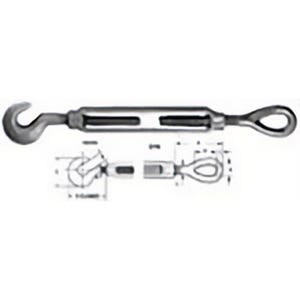
![Edward W. Daniel 25160 Hook & Eye Turnbuckle, 3/4 in x 18 in, Galvanized]() Edward W. Daniel 25160 Hook & Eye Turnbuckle, 3/4 in x 18 in, Galvanized SKU#: FIT80360In stock$42.55$42.55
Edward W. Daniel 25160 Hook & Eye Turnbuckle, 3/4 in x 18 in, Galvanized SKU#: FIT80360In stock$42.55$42.55 -
![Crosby® 1032616 HG-228 Turnbuckle, Jaw and Jaw, 5/8 in Thread, 3500 lb Working, 6 in Take Up, 15.82 in L Close, Steel]() Crosby® 1032616 HG-228 Turnbuckle, Jaw and Jaw, 5/8 in Thread, 3500 lb Working, 6 in Take Up, 15.82 in L Close, Steel SKU#: FIT13500In stock$123.00$123.00
Crosby® 1032616 HG-228 Turnbuckle, Jaw and Jaw, 5/8 in Thread, 3500 lb Working, 6 in Take Up, 15.82 in L Close, Steel SKU#: FIT13500In stock$123.00$123.00 -
![Crosby® 1032938 HG-228 Turnbuckle, Jaw and Jaw, 1-1/2 in Thread, 21400 lb Working, 12 in Take Up, 33.68 in L Close, Steel]() Crosby® 1032938 HG-228 Turnbuckle, Jaw and Jaw, 1-1/2 in Thread, 21400 lb Working, 12 in Take Up, 33.68 in L Close, Steel SKU#: FIT13980In stock$949.00$949.00
Crosby® 1032938 HG-228 Turnbuckle, Jaw and Jaw, 1-1/2 in Thread, 21400 lb Working, 12 in Take Up, 33.68 in L Close, Steel SKU#: FIT13980In stock$949.00$949.00 -
![Crosby® 1032830 HG-228 Turnbuckle, Jaw and Jaw, 1 in Thread, 10000 lb Working, 18 in Take Up, 33.18 in L Close, Steel]() Crosby® 1032830 HG-228 Turnbuckle, Jaw and Jaw, 1 in Thread, 10000 lb Working, 18 in Take Up, 33.18 in L Close, Steel SKU#: FIT13830In stock$497.00$497.00
Crosby® 1032830 HG-228 Turnbuckle, Jaw and Jaw, 1 in Thread, 10000 lb Working, 18 in Take Up, 33.18 in L Close, Steel SKU#: FIT13830In stock$497.00$497.00 -
![Crosby® 1033054 HG-228 Turnbuckle, Jaw and Jaw, 2 in Thread, 37000 lb Working, 24 in Take Up, 52.72 in L Close, Steel]() Crosby® 1033054 HG-228 Turnbuckle, Jaw and Jaw, 2 in Thread, 37000 lb Working, 24 in Take Up, 52.72 in L Close, Steel SKU#: FIT14100In stock$3,099.00$3,099.00
Crosby® 1033054 HG-228 Turnbuckle, Jaw and Jaw, 2 in Thread, 37000 lb Working, 24 in Take Up, 52.72 in L Close, Steel SKU#: FIT14100In stock$3,099.00$3,099.00