FREE SHIPPING ON ALL ORDERS OVER $250


Below-the-Hook Lifting Accessories
-
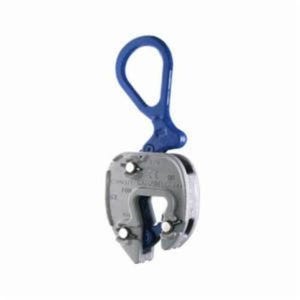
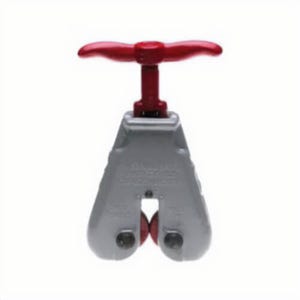
![Campbell® 6423000 GX Series Plate Clamp, 0.5 ton Load, 1/16 to 5/8 in Jaw Opening, 4 in OAW, Forged Steel, Load Activated Locking]() Campbell® 6423000 GX Series Plate Clamp, 0.5 ton Load, 1/16 to 5/8 in Jaw Opening, 4 in OAW, Forged Steel, Load Activated Locking SKU#: MAT60000In stock$403.41$403.41
Campbell® 6423000 GX Series Plate Clamp, 0.5 ton Load, 1/16 to 5/8 in Jaw Opening, 4 in OAW, Forged Steel, Load Activated Locking SKU#: MAT60000In stock$403.41$403.41 -
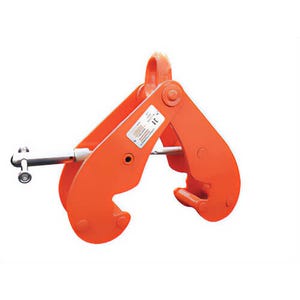
![Elephant Lifting Products™ EBC-5 Eye Beam Clamp, 5 ton, 3.5 to 12.2 in]() Elephant Lifting Products™ EBC-5 Eye Beam Clamp, 5 ton, 3.5 to 12.2 in SKU#: EBC-5-16189In stock$274.40$274.40
Elephant Lifting Products™ EBC-5 Eye Beam Clamp, 5 ton, 3.5 to 12.2 in SKU#: EBC-5-16189In stock$274.40$274.40 -
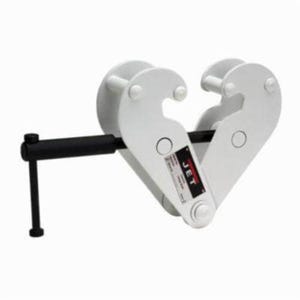
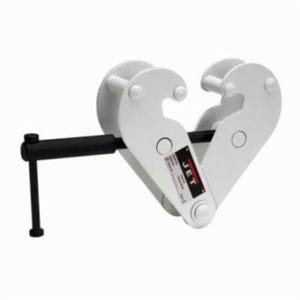
![JET® 202720 HD Series Heavy Duty Beam Clamp, 2 ton Load, 3 to 8-2/3 in Jaw, 3.74 in OAW, Steel]() JET® 202720 HD Series Heavy Duty Beam Clamp, 2 ton Load, 3 to 8-2/3 in Jaw, 3.74 in OAW, Steel SKU#: MAT70005In stock$103.89$103.89
JET® 202720 HD Series Heavy Duty Beam Clamp, 2 ton Load, 3 to 8-2/3 in Jaw, 3.74 in OAW, Steel SKU#: MAT70005In stock$103.89$103.89 -
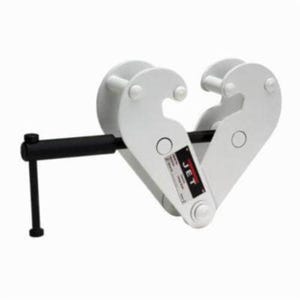
![JET® 202710 HD Series Heavy Duty Beam Clamp, 1 ton Load, 3 to 8-2/3 in Jaw, 3.74 in OAW, Steel]() JET® 202710 HD Series Heavy Duty Beam Clamp, 1 ton Load, 3 to 8-2/3 in Jaw, 3.74 in OAW, Steel SKU#: MAT70000In stock$87.79$87.79
JET® 202710 HD Series Heavy Duty Beam Clamp, 1 ton Load, 3 to 8-2/3 in Jaw, 3.74 in OAW, Steel SKU#: MAT70000In stock$87.79$87.79 -
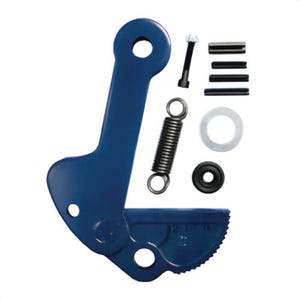
![Campbell® 6506001 Replacement Cam/Pad Kit, For use with 1/2 ton GX Clamps]() Campbell® 6506001 Replacement Cam/Pad Kit, For use with 1/2 ton GX Clamps SKU#: MAT60132In stock$115.62$115.62
Campbell® 6506001 Replacement Cam/Pad Kit, For use with 1/2 ton GX Clamps SKU#: MAT60132In stock$115.62$115.62 -
![JET® 202730 HD Series Heavy Duty Wide Beam Clamp, 3 ton Load, 12-3/5 in OAW, Steel]() JET® 202730 HD Series Heavy Duty Wide Beam Clamp, 3 ton Load, 12-3/5 in OAW, Steel SKU#: MAT70010In stock$145.13$145.13
JET® 202730 HD Series Heavy Duty Wide Beam Clamp, 3 ton Load, 12-3/5 in OAW, Steel SKU#: MAT70010In stock$145.13$145.13 -
![CM® Camlok™ 92 1500 Universal Plate Lifting Clamp, 350 to 3300 lb Load, 3/4 in Jaw, 4.961 in OAW, Hardened Steel Jaw and Pad]() CM® Camlok™ 92 1500 Universal Plate Lifting Clamp, 350 to 3300 lb Load, 3/4 in Jaw, 4.961 in OAW, Hardened Steel Jaw and Pad SKU#: MAT80005In stock$586.87$586.87
CM® Camlok™ 92 1500 Universal Plate Lifting Clamp, 350 to 3300 lb Load, 3/4 in Jaw, 4.961 in OAW, Hardened Steel Jaw and Pad SKU#: MAT80005In stock$586.87$586.87 -
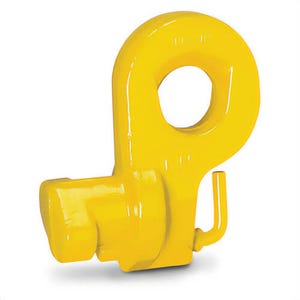
![CM® CLB40 Side Mount Container Lifting Lug, 88100 lb Working Load Limit, 7.126 in H x 5.984 in W x 2.953 in D]() CM® CLB40 Side Mount Container Lifting Lug, 88100 lb Working Load Limit, 7.126 in H x 5.984 in W x 2.953 in D SKU#: MAT90225In stock$1,191.10$1,191.10
CM® CLB40 Side Mount Container Lifting Lug, 88100 lb Working Load Limit, 7.126 in H x 5.984 in W x 2.953 in D SKU#: MAT90225In stock$1,191.10$1,191.10 -
![Elephant Lifting Products™ EBC-10 Eye Beam Clamp, 10 ton, 3.5 to 11.8 in]() Elephant Lifting Products™ EBC-10 Eye Beam Clamp, 10 ton, 3.5 to 11.8 in SKU#: EBC-10-16189In stock$391.87$391.87
Elephant Lifting Products™ EBC-10 Eye Beam Clamp, 10 ton, 3.5 to 11.8 in SKU#: EBC-10-16189In stock$391.87$391.87 -
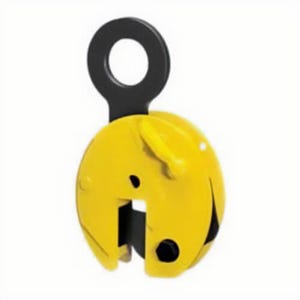
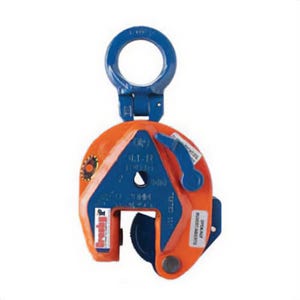
![Crosby® 2701663 IPU10 Universal Vertical Lifting Clamp, 1 ton Load, 3/4 in Jaw, 5 in OAW, Welded Alloy Steel]() Crosby® 2701663 IPU10 Universal Vertical Lifting Clamp, 1 ton Load, 3/4 in Jaw, 5 in OAW, Welded Alloy Steel SKU#: MAT90116In stock$1,288.00$1,288.00
Crosby® 2701663 IPU10 Universal Vertical Lifting Clamp, 1 ton Load, 3/4 in Jaw, 5 in OAW, Welded Alloy Steel SKU#: MAT90116In stock$1,288.00$1,288.00 -
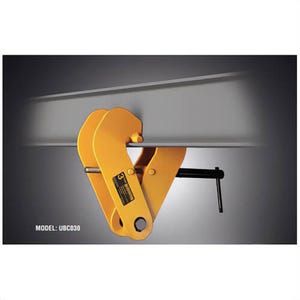
![Harrington® UBC030 Universal Beam Clamp, 3 ton Load, 19-3/4 in, Steel, Bowma Nut Locking]() Harrington® UBC030 Universal Beam Clamp, 3 ton Load, 19-3/4 in, Steel, Bowma Nut Locking SKU#: MAT10502In stock$289.17$289.17
Harrington® UBC030 Universal Beam Clamp, 3 ton Load, 19-3/4 in, Steel, Bowma Nut Locking SKU#: MAT10502In stock$289.17$289.17 -
![Harrington® UBC020 Universal Beam Clamp, 2 ton Load, 12-1/4 in, Steel, Bowma Nut Locking]() Harrington® UBC020 Universal Beam Clamp, 2 ton Load, 12-1/4 in, Steel, Bowma Nut Locking SKU#: MAT10501In stock$181.17$181.17
Harrington® UBC020 Universal Beam Clamp, 2 ton Load, 12-1/4 in, Steel, Bowma Nut Locking SKU#: MAT10501In stock$181.17$181.17 -
![Harrington® UBC010 Universal Beam Clamp, 1 ton Load, 12-1/4 in, Steel, Bowma Nut Locking]() Harrington® UBC010 Universal Beam Clamp, 1 ton Load, 12-1/4 in, Steel, Bowma Nut Locking SKU#: MAT10500In stock$163.74$163.74
Harrington® UBC010 Universal Beam Clamp, 1 ton Load, 12-1/4 in, Steel, Bowma Nut Locking SKU#: MAT10500In stock$163.74$163.74 -
![Crosby® 2701675 IPU10 Universal Vertical Lifting Clamp, 0.5 ton Load, 5/8 in Jaw, 4.53 in OAW, Welded Alloy Steel]() Crosby® 2701675 IPU10 Universal Vertical Lifting Clamp, 0.5 ton Load, 5/8 in Jaw, 4.53 in OAW, Welded Alloy Steel SKU#: MAT90115In stock$962.00$962.00
Crosby® 2701675 IPU10 Universal Vertical Lifting Clamp, 0.5 ton Load, 5/8 in Jaw, 4.53 in OAW, Welded Alloy Steel SKU#: MAT90115In stock$962.00$962.00 -
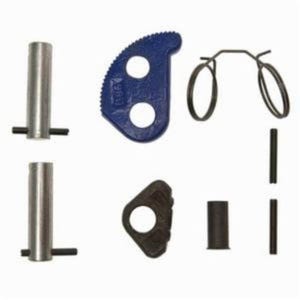
![Campbell® 6506011 Replacement Cam/Pad Kit, For use with 1 ton GX Clamps]() Campbell® 6506011 Replacement Cam/Pad Kit, For use with 1 ton GX Clamps SKU#: MAT60118Call for availability$158.39$158.39
Campbell® 6506011 Replacement Cam/Pad Kit, For use with 1 ton GX Clamps SKU#: MAT60118Call for availability$158.39$158.39 -
![Campbell® 6423005 GX Series Plate Clamp, 1 ton Load, 1/16 to 3/4 in Jaw Opening, 4-3/4 in OAW, Forged Steel, Load Activated Locking]() Campbell® 6423005 GX Series Plate Clamp, 1 ton Load, 1/16 to 3/4 in Jaw Opening, 4-3/4 in OAW, Forged Steel, Load Activated Locking SKU#: MAT60050Call for availability$573.01$573.01
Campbell® 6423005 GX Series Plate Clamp, 1 ton Load, 1/16 to 3/4 in Jaw Opening, 4-3/4 in OAW, Forged Steel, Load Activated Locking SKU#: MAT60050Call for availability$573.01$573.01 -
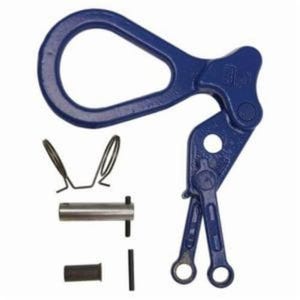
![Campbell® 6506010 Replacement Shackle/Linkage Kit, For use with 1 ton GX Clamps]() Campbell® 6506010 Replacement Shackle/Linkage Kit, For use with 1 ton GX Clamps SKU#: MAT60134Call for availability$227.72$227.72
Campbell® 6506010 Replacement Shackle/Linkage Kit, For use with 1 ton GX Clamps SKU#: MAT60134Call for availability$227.72$227.72 -
![Elephant Lifting Products™ EBC-3 Eye Beam Clamp, 3 ton, 3.5 to 12.2 in]() Elephant Lifting Products™ EBC-3 Eye Beam Clamp, 3 ton, 3.5 to 12.2 in SKU#: EBC-3-16189Call for availability$227.20$227.20
Elephant Lifting Products™ EBC-3 Eye Beam Clamp, 3 ton, 3.5 to 12.2 in SKU#: EBC-3-16189Call for availability$227.20$227.20 -
![Campbell® 6421801 Duplex Hand Grip Clamp with 2 in Handle, 500 lb Load, 5/16 in Jaw Opening, 3-3/4 in OAW, Forged Steel]() Campbell® 6421801 Duplex Hand Grip Clamp with 2 in Handle, 500 lb Load, 5/16 in Jaw Opening, 3-3/4 in OAW, Forged Steel SKU#: 6421801-10143Call for availability$234.63$234.63
Campbell® 6421801 Duplex Hand Grip Clamp with 2 in Handle, 500 lb Load, 5/16 in Jaw Opening, 3-3/4 in OAW, Forged Steel SKU#: 6421801-10143Call for availability$234.63$234.63